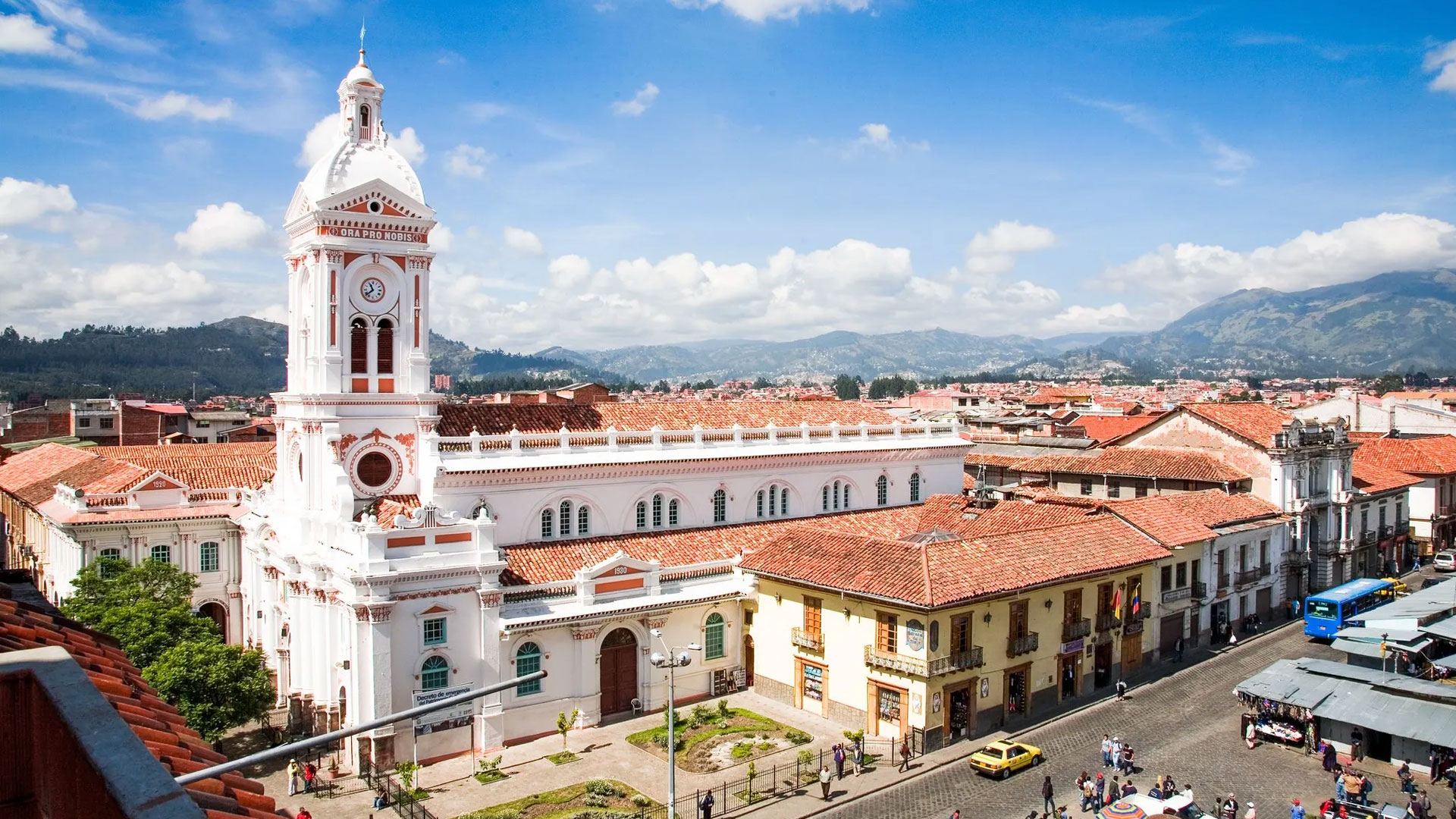
Why this Andean city keeps surprising the people who move here.
Cuenca is one of South America’s best preserved colonial cities, and one of the most quietly fascinating places in Ecuador. Most people who visit for the first time leave with the same reaction: they had no idea it was this beautiful, this historic, or this livable.
If you’re considering a move to Cuenca, or you’re already here and want the full picture, here are seven facts that explain why this city consistently ranks among the best places to live in Ecuador.
Where Cuenca is, exactly
Cuenca sits in the southern highlands of Ecuador, in Azuay province, high in the Andes mountains. The metropolitan area is home to more than 600,000 people, making it Ecuador’s third largest city. Despite its size, the historic center feels like a small town, walkable, calm, and full of detail.
The basics
Its full official name is Santa Ana de los Ríos de Cuenca, a name that reflects the four rivers running through it: the Tomebamba, Yanuncay, Tarqui, and Machángara. The Spanish founded the city in 1557, and Cuenca sits at over 2,500 meters (8.200 feet) above sea level, which gives it a mild, spring like climate for most of the year.
A UNESCO World Heritage city
Cuenca’s historic center is a UNESCO World Heritage Site, and it’s easy to see why. The colonial architecture here is among the best preserved in the Americas. The most iconic landmark is the New Cathedral, instantly recognizable by its sky blue domes that define the city’s skyline.
Why people call it the Athens of Ecuador?
Cuenca has earned the nickname “Athens of Ecuador” for its cultural and educational importance. It’s home to several major universities, a thriving arts scene, museums, and a long tradition of craftsmanship. This isn’t a city that grew around tourism. It grew around education, culture, and trade, and that history is still visible everywhere.
The Panama hat connection
Here’s a fact that surprises most people: the famous Panama hat isn’t from Panama at all. It’s woven from toquilla straw right here in the Cuenca region, using techniques passed down for generations. These hats are recognized worldwide as a symbol of South American craftsmanship, even though most people have no idea where they actually come from.
Nature is never far away
Just outside the city, Cajas National Park is one of Ecuador’s most striking landscapes, with hundreds of glacial lakes scattered across high altitude páramo terrain. It’s an easy day trip from Cuenca, and a reminder of how close the wilderness is to everyday life here.
A city that still feels like itself
Cuenca holds onto its indigenous and colonial traditions in a way that feels lived in, not performed for visitors. Local markets, traditional festivals, and a food culture that locals are genuinely proud of are all part of daily life, not just things you see on a tour.
The short version
Cuenca brings together history, culture, nature, and architecture in a combination that’s hard to find anywhere else in Latin America. For people thinking about relocating, it offers something increasingly rare: a city that’s beautiful, walkable, culturally rich, and still affordable.
If you’re exploring what life in Cuenca could look like, we can help you get a clearer picture, from visas and paperwork to finding your way around the city.
Start your move at cuencaroots.com